
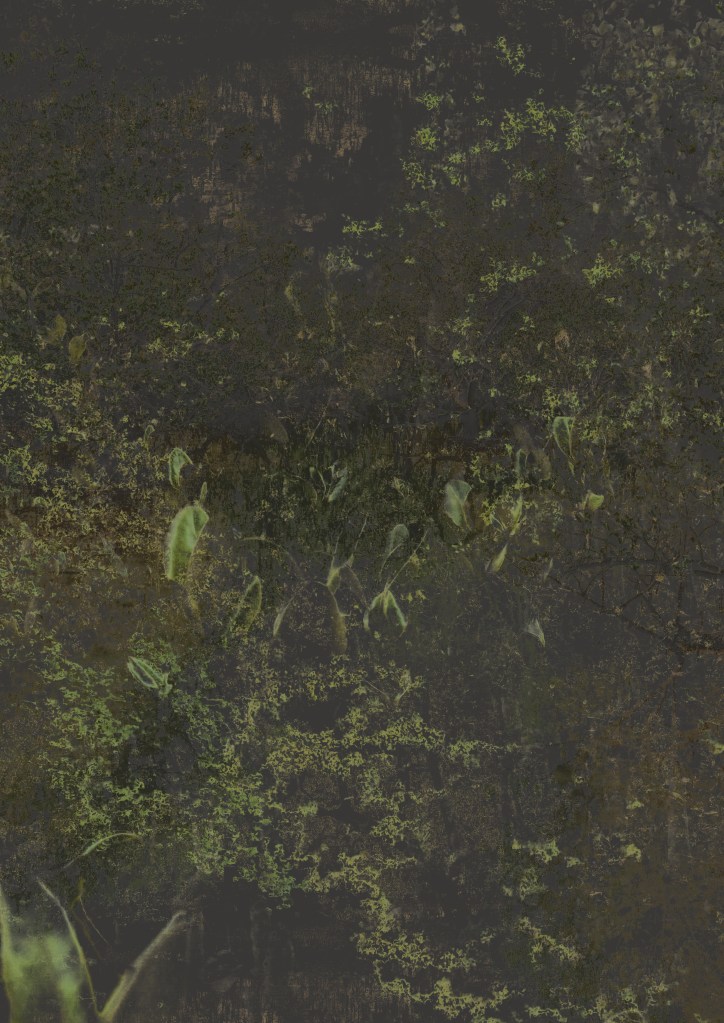
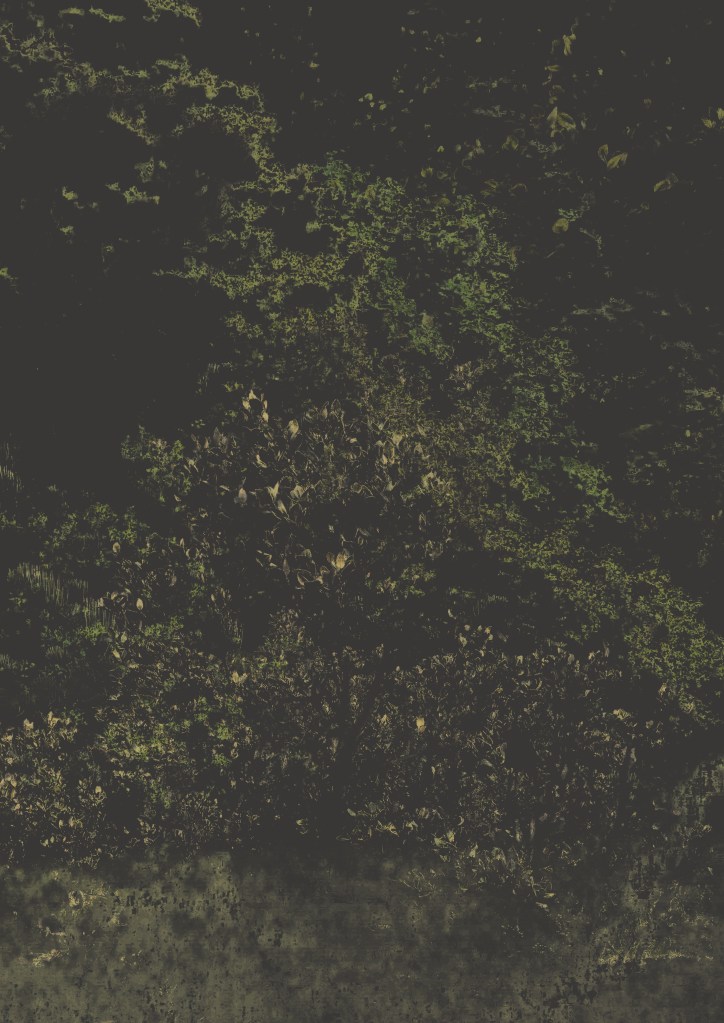
Mangroves on Resenes Top 20 House Colours, 2024.
Digital photographic prints.
My practice explores the suburban development of land and its close proximity to bordering scenic reserves, in Aotearoa. I explore interior and exterior views of forest ecosystems, along with scenes of both developed and forgotten environments from their edges, as my reference point. This collection of sites has allowed me to play with merging ecologically diverse scenes into a representation of history, current state and potential future.
This recent body of work aims to explore under the canopy of the mangrove forest, revealing and paying attention to the surrounding, and hidden, saline ecosystem below.
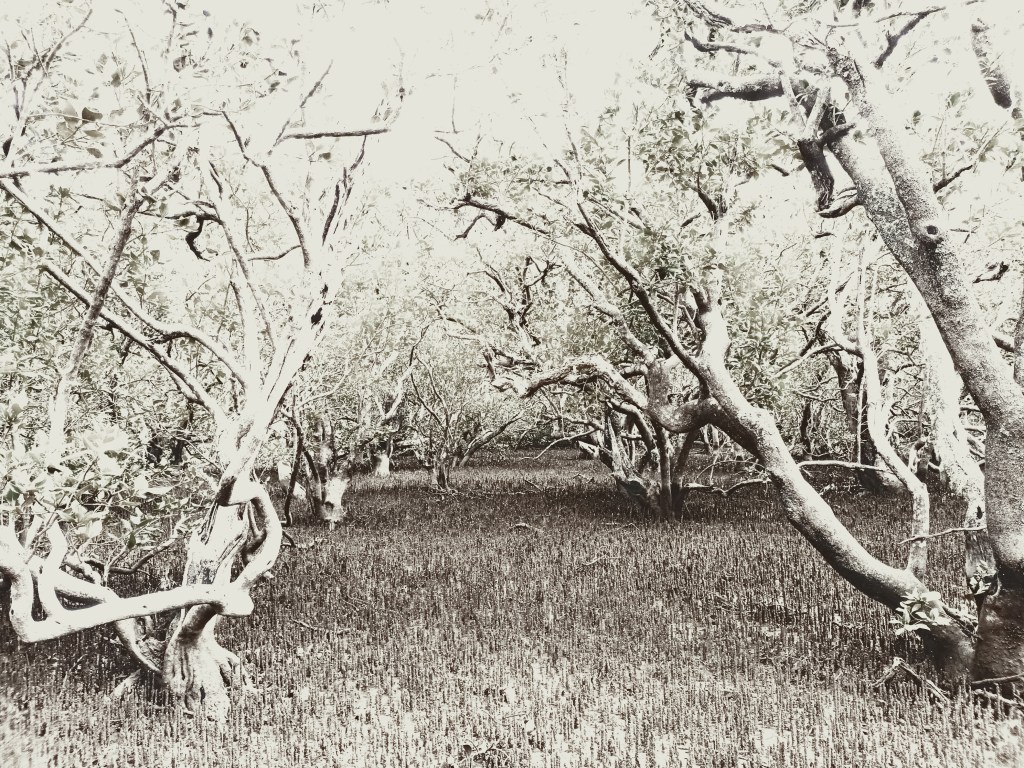

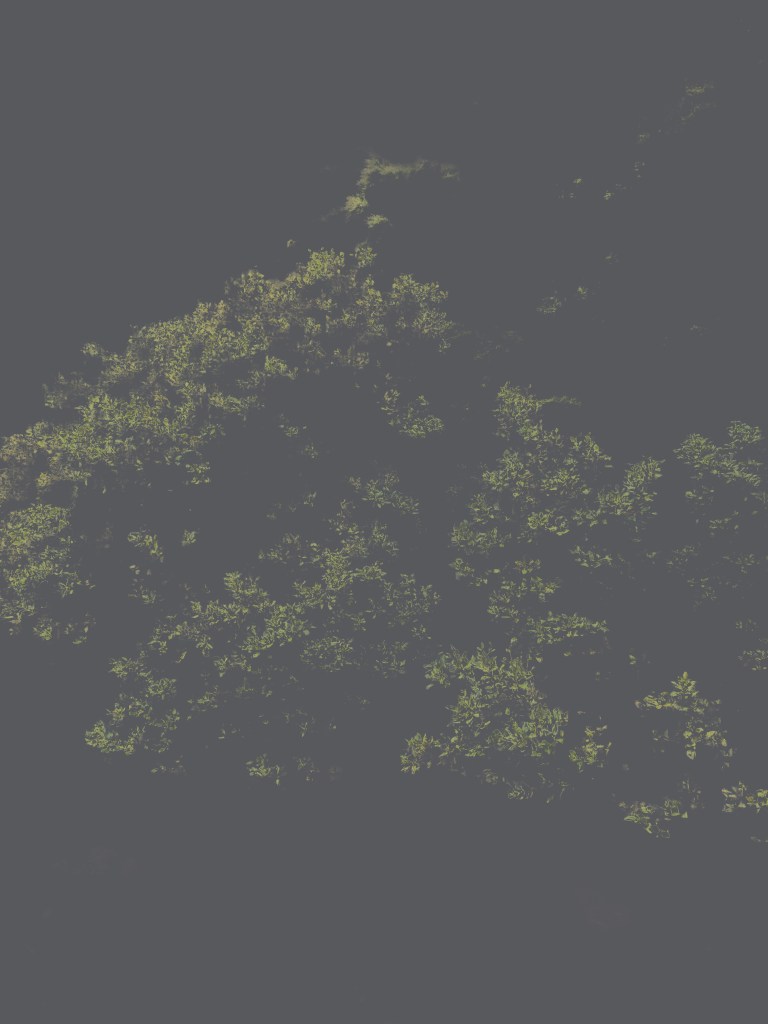
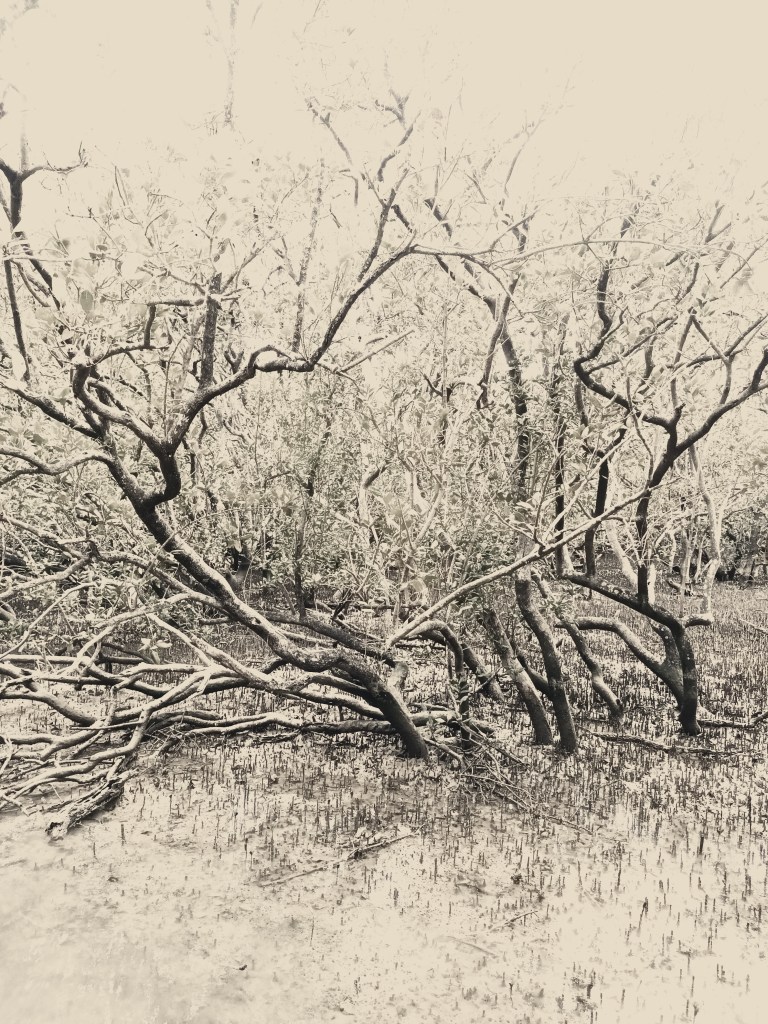
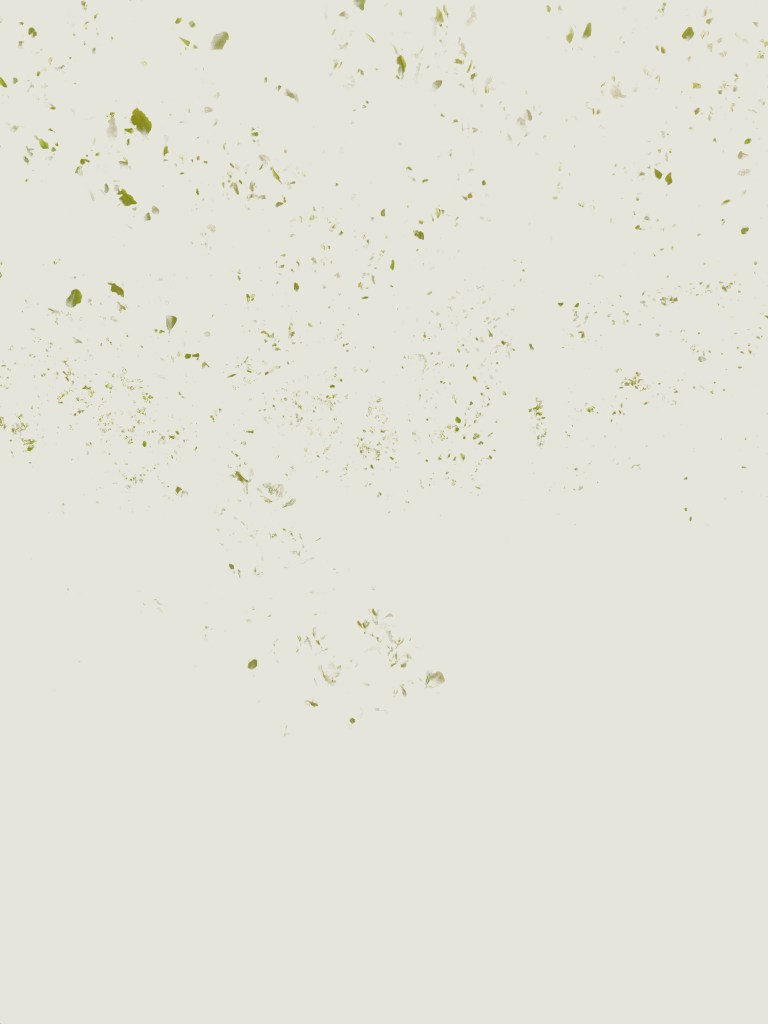
Mangroves Assemblage No. 1 + 2
Digital photographic prints.
As stated in Indigenous terrestrial and wetland ecosystems of Auckland report published by Auckland Regional Council in March 2017, “Increased sedimentation has resulted in a decline of seagrass and caused an expansion of mangrove communities. Pollution and reclamation also threaten this ecosystem near urban areas and farmland […] While reclamation is less extensive than in the past, direct mangrove clearance near urban communities is an increasing threat”.1 This makes me consider how external impacts cause the ecosystem to shift and spread. The increasing, or declining coverage of mangrove stands around our suburban zones causes an imbalance within the natural supporting ecosystem. Altering their state, along with their ability to provide a habitat for flora and fauna to thrive, to act as a natural filter to our waterways, and as the natural buffer between land and sea.
My work selects and removes sections of the mangrove forests existing within saline ecosystems across Te Ika-a-Māu. By applying colour selection tools in Photoshop to photographs of mangrove forests, these selections are taken from their original source then re-arranged on a new ground of colour, one sourced from Resense’s ‘Top 20 House Colours 2024; Sea Fog, Alabaster, Spanish White, Grey Friars and Ironsand’.2
These reconstructed ecosystems explore the effects of altered foliage coverage within their new neutral ‘domestic’ ground by addition and removal. An altered ‘current’ state is emerging, through domestic impact.
References:
- Singers, N.; Osborne, B.; Lovegrove, T.; Jamieson, A.; Boow, J.; Sawyer, J.; Hill, K.; Andrews, J.; Hill, S.; Webb, C. (2017). Indigenous terrestrial and wetland ecosystems of Auckland. Auckland Council. https://knowledgeauckland.org.nz/media/1399/indigenous-terrestrial-and-wetland-ecosystems-of-auckland-web-print-mar-2017.pdf (Accessed 18/05/2025)
- Top 20 Colours. Resene Paints. https://www.resene.co.nz/comn/whtsnew/top-twenty.htm?srsltid=AfmBOorYkt3QRWONDqTk3bt4DPETI209ih3BAcVSIcDdymjnC4fuMnl3 (Accessed 18/05/2025)
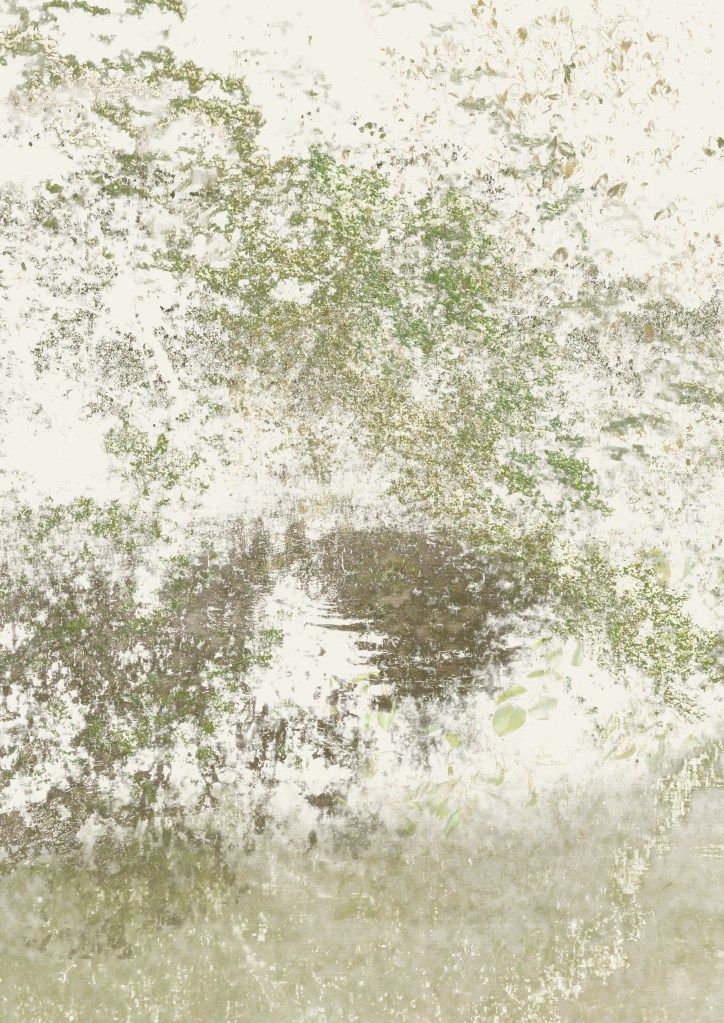
Mangrove Assemblage No. 1: Alabaster, 470mm x 670mm.

Mangrove Assemblage No. 2: Grey Frais, 470mm x 670mm.

 Meg White Art + Design