
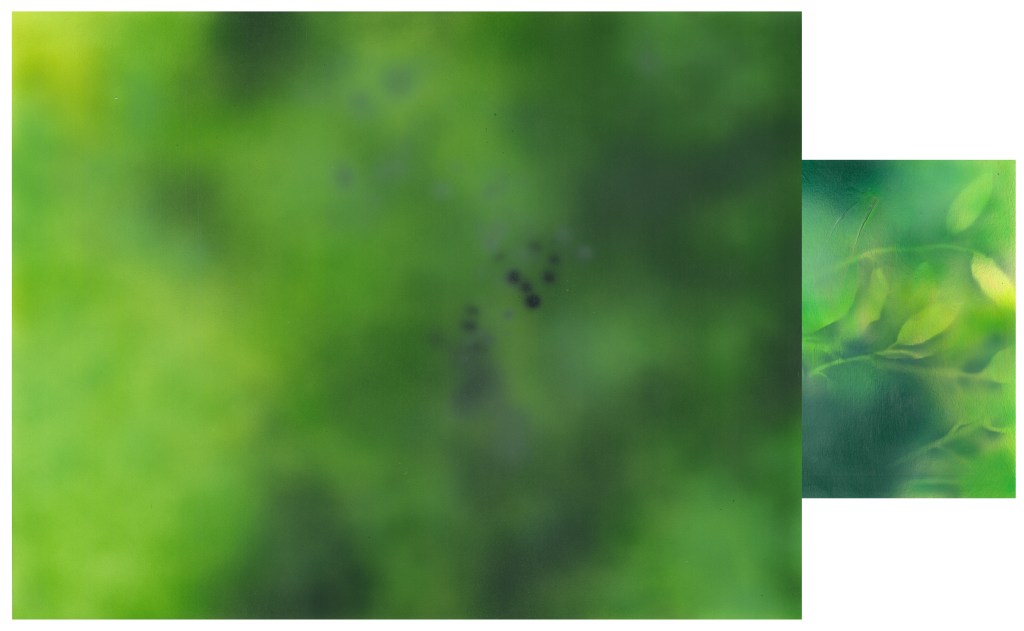
Forest + Periphery
Acrylic paint and laser-cut detail on paper, sizes vary.
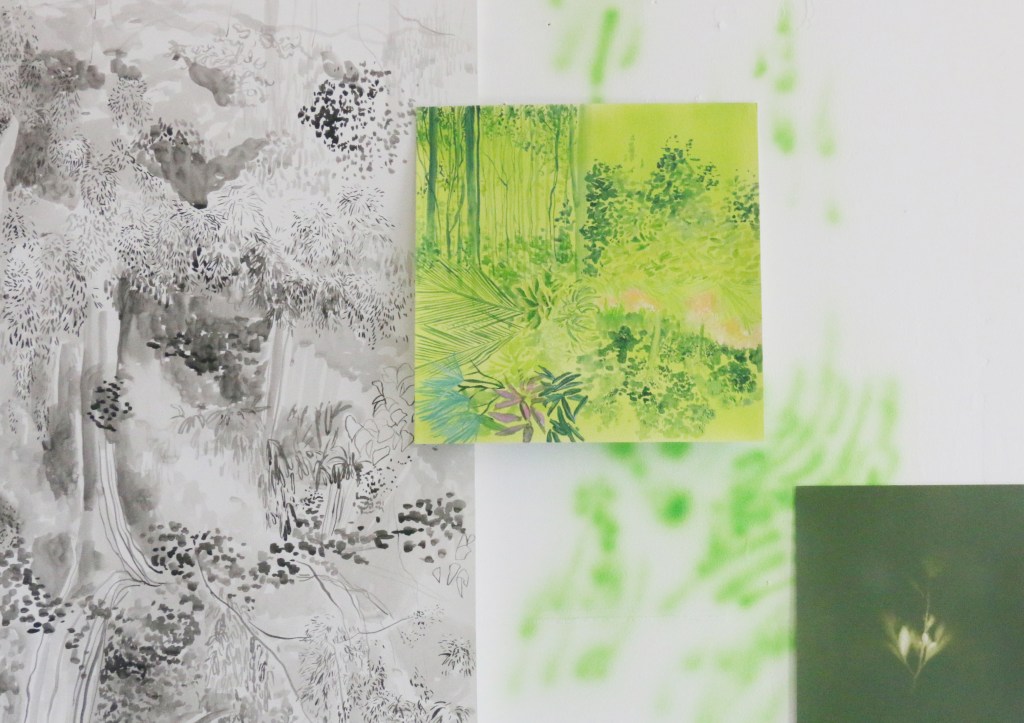
Forest and Periphery aims to highlight the junction between cultivated environments and their historic counterparts; a perceived wilderness, a living museum of New Zealand’s ecological past. I aim to manipulate the balance of this impossible scene. This clashing collection of plants, sites and scenery is pushed, jammed, slipped, or dislocated. These cropped scenes and recorded botanical specimens have been selected as pieces of a broader vista; lost within the backdrop of our daily lives, struggling for space and recognition.


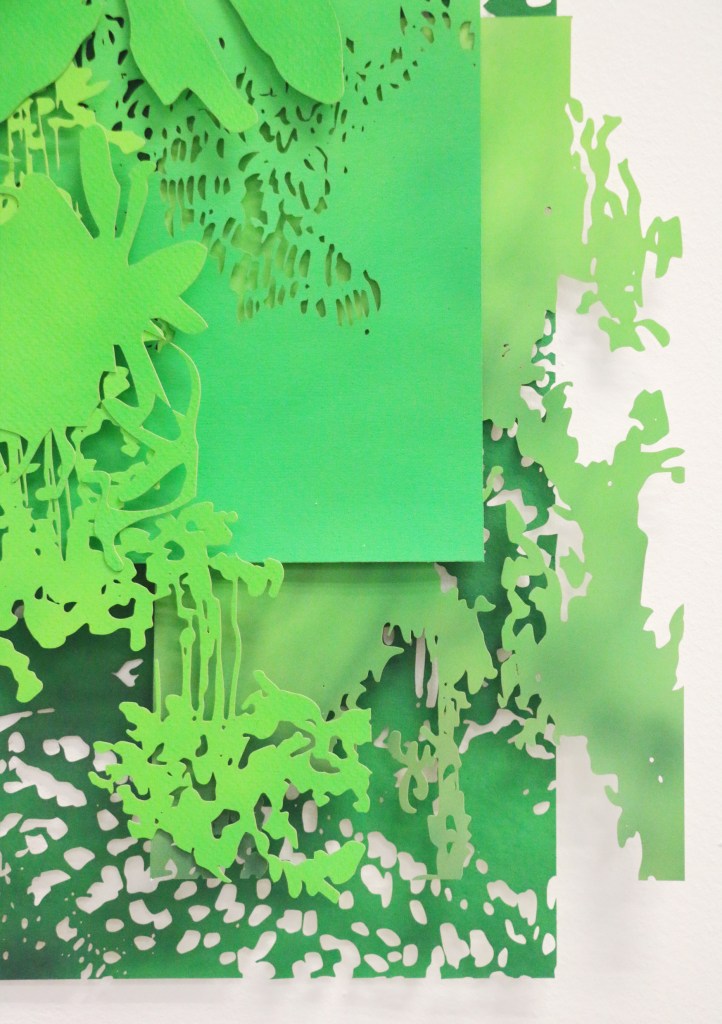
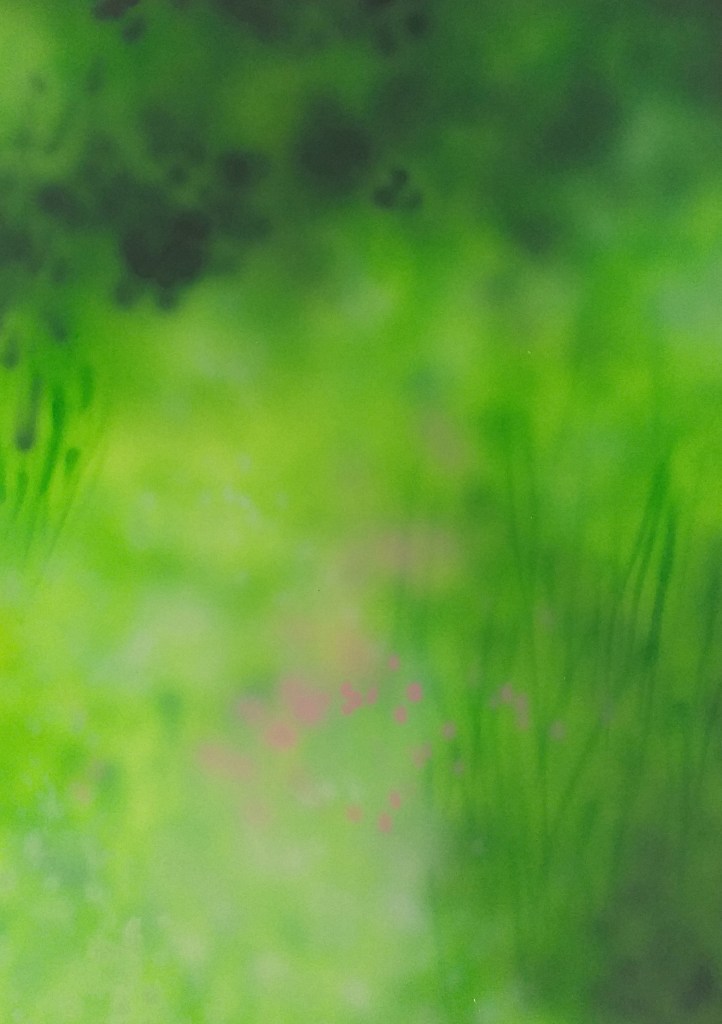
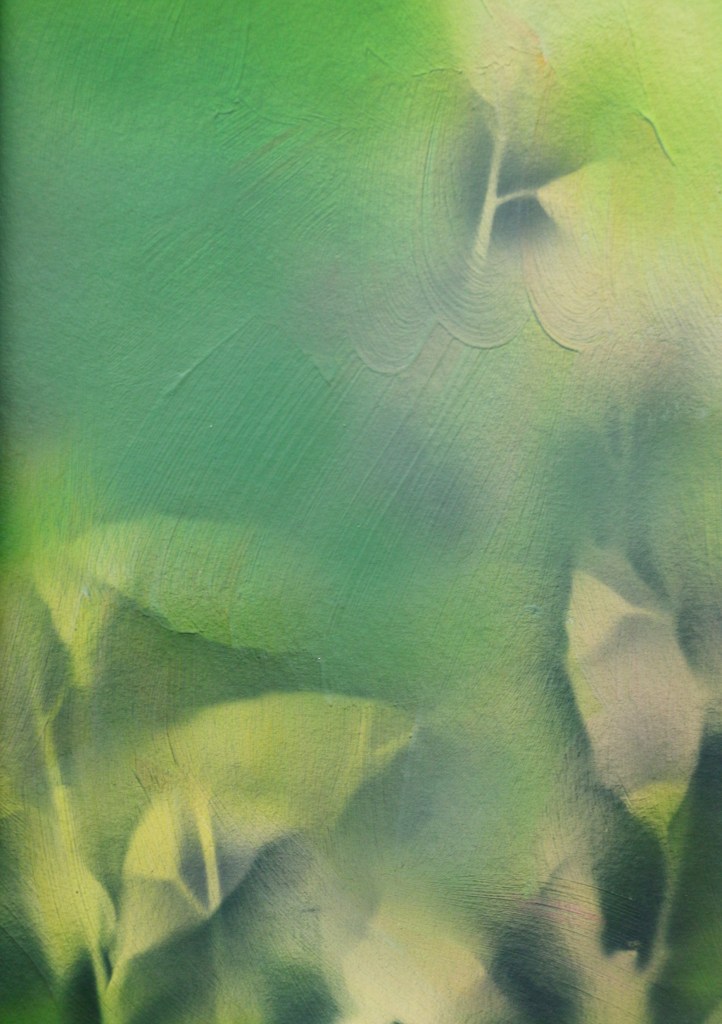
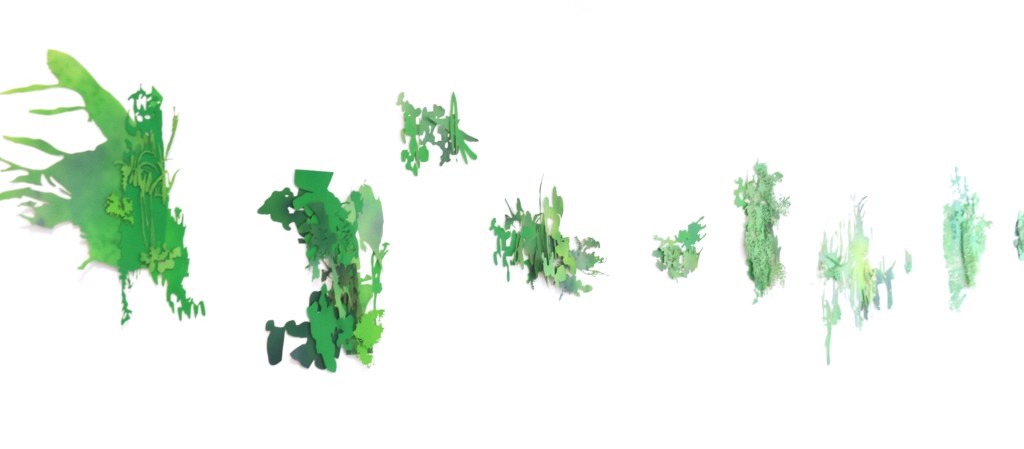
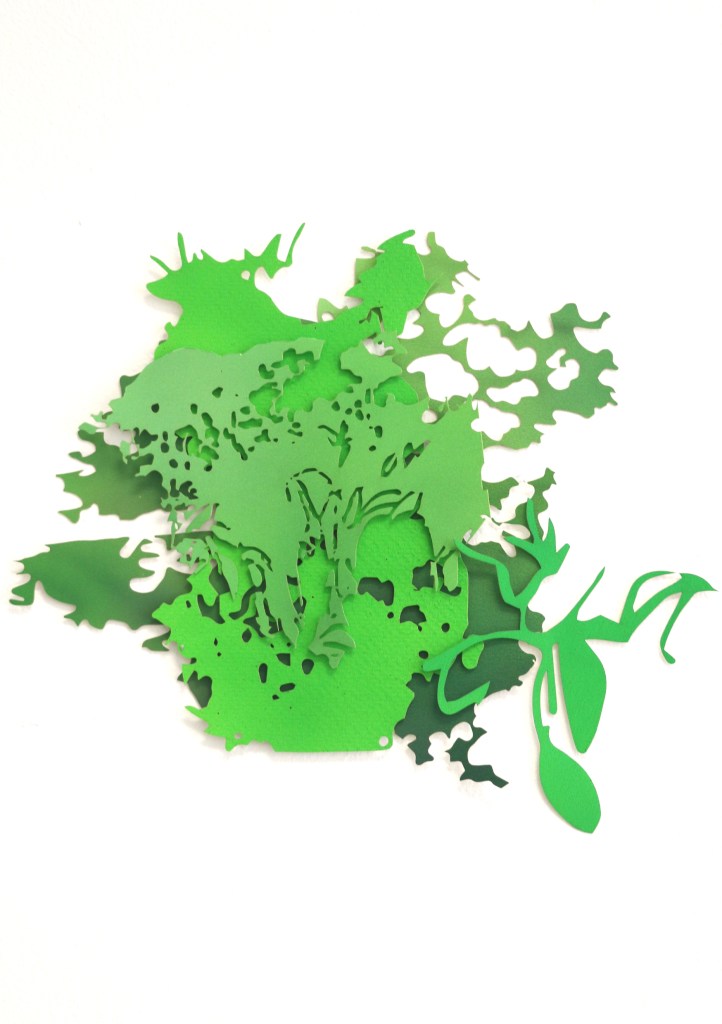
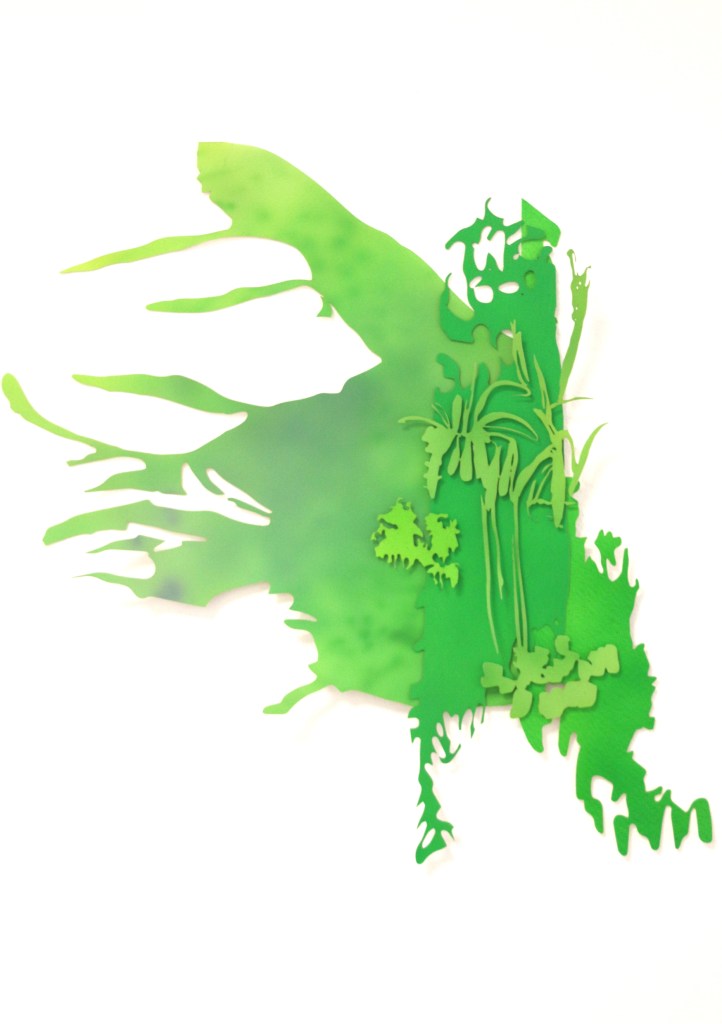
Pukenui Pockets
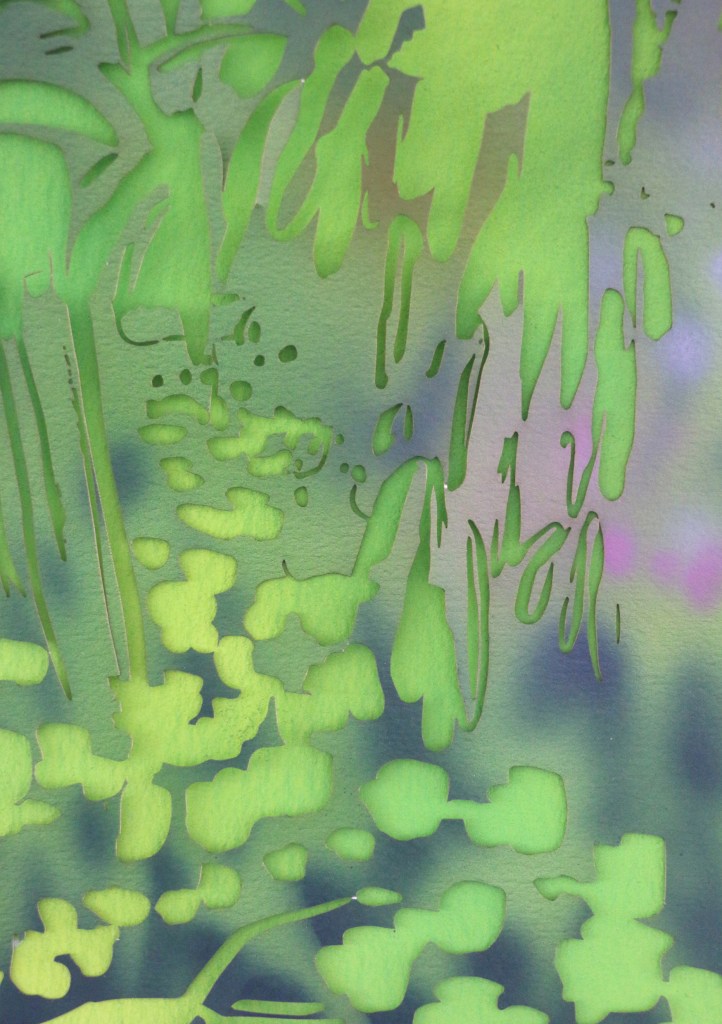
Acrylic paint with laser cut detail on paper, works vary in size.
These works explore a changing natural environment, one which is still under development. By using marks that obscure the details found in the environment, by way of brush mark and laser-cut detail along with a saturated green colour palette, sites on the forest edges are recorded, altered and reconstructed. Pukenui Pockets aims to acknowledge the untouched pockets of wilderness in layered contrast to the re-constructed environments that are under development in suburbia. An artificial environment under construction within the New Zealand landscape.


Periphery Postcards
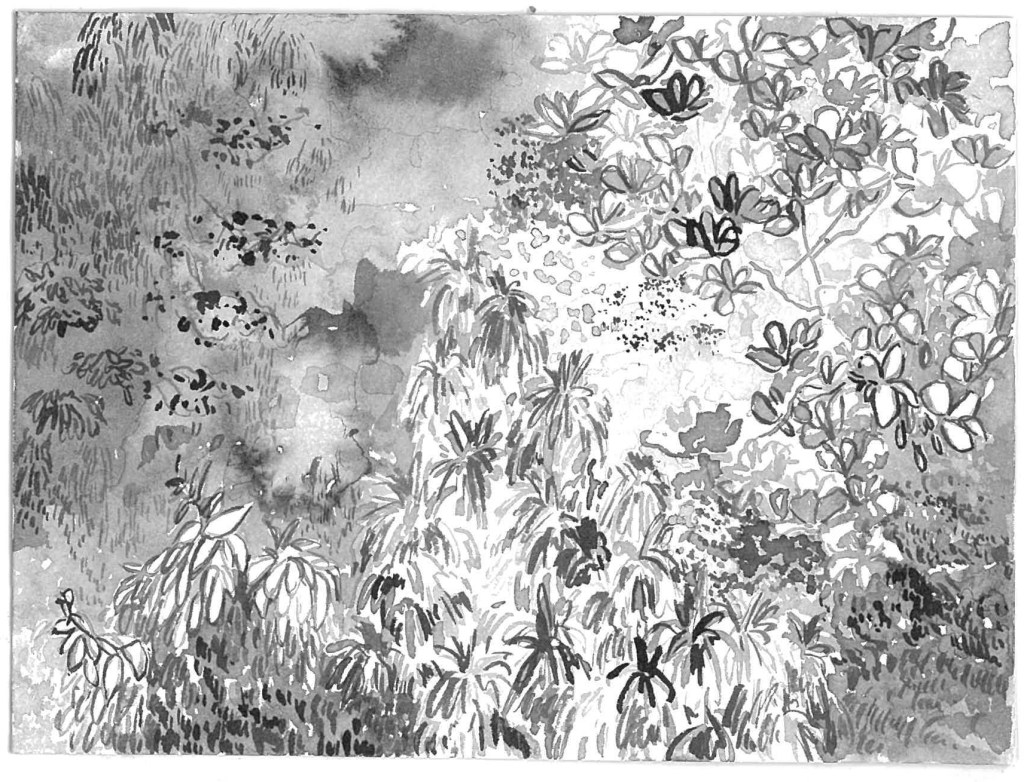
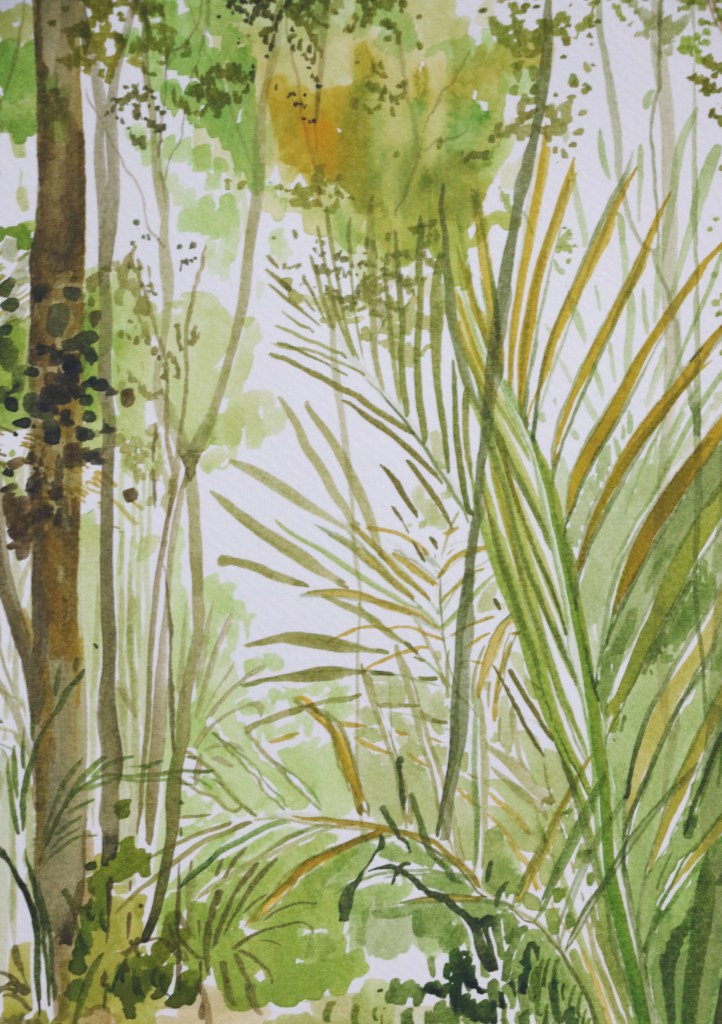
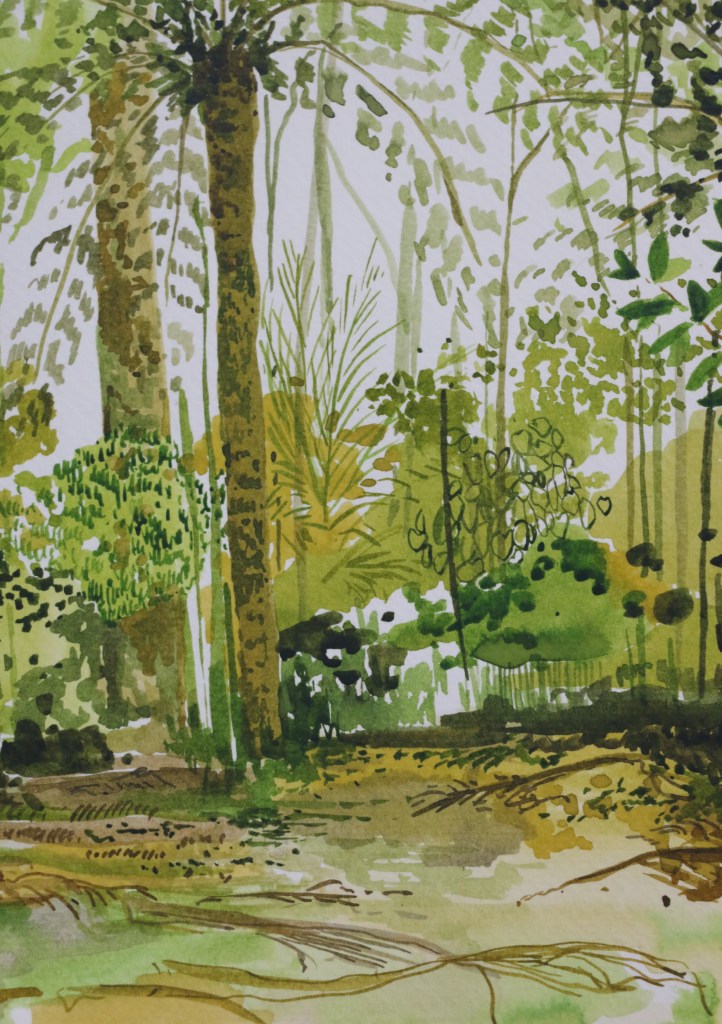
Ink on paper, 105 x 140 mm each.
The desire to discover, experience, collect memories from the land by Colonial collectors have had political, environmental and aesthetic impacts on the way New Zealand’s landscape is viewed. The link between ownership, care and experience is a fragile relationship. One in which human intervention impacts the development of property and the care of areas of ‘special interest’ in New Zealand.
Through the documentation of a site, by way of a stitched digital panoramic photograph, historical black and white photographic postcard or a hand rendered impression captured through a ‘Claude glass’ 1 reflection, sites of special interest are recorded from the viewpoint of the visitor. Each vast and stretching landscape captured, collected and recorded; past, present, and potential environments are captured from the best vantage point.
360 Forest View
Ink on paper, 400 x 1500 mm.
Through my own experiences of visiting and documenting the landscape, my own viewpoint changed. Being drawn into the forest rather than viewing from afar and noticing the areas on the periphery which were forgotten; neither a ‘scenic reserve’ 2, or a suburban garden. I see these two viewpoints sitting in contrast to the traditional picturesque scene, vast and expansive. Both Periphery Postcards and 360 Degree Forest View play with placing the viewer in a different position, a closed view which holds the view inside a pocket of tumbling plant life, rather than stretching out over a cleared horizon. The viewer is faced with a pocket of New Zealand’s past and one which suggests it’s potential future.
Claude Glass – “[…] is a tool used by artists in the 18th Century to capture a view of the landscape in a reduced, simplified manner. Tonal range and colour is reduced to give the scene a painterly quality. Artists’ would turn their back to the scene and the Claude Glass would capture a reflected image with a gentle picturesque aesthetic quality.”
Scenic Reserve – “These reserves are established to protect and preserve in perpetuity, for their intrinsic worth and for the public benefit, enjoyment and use, such qualities of scenic interest or beauty or natural features worthy of protection in the public interest.”


Tumbling Scenery: Landscapes, Forests & Gardens
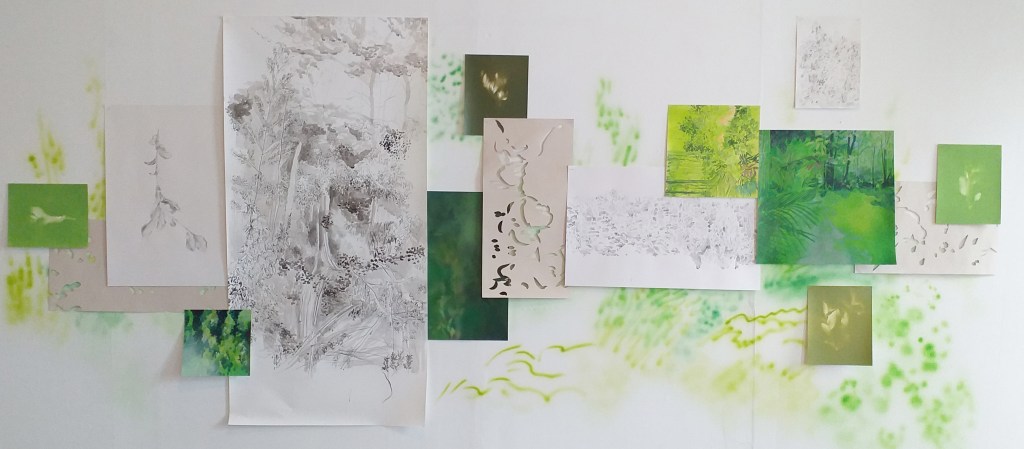
Acrylic paint, graphite pencil, water-soluble graphite, spray paint and laser cut detail on paper. Works vary in size, presented as a collection of works.
Using photographs of scenic reserves and gardens, I aim to stitch together conflicting scenes that are representative of cultivation and wilderness. At these junctions, the view is off-balance, connected by a tumbling axis. I aim to manipulate the balance of each impossible scene highlighting the junction between these cultivated environments and their historic counterparts, a perceived wilderness, and a living museum of New Zealand’s past.






 Meg White Art + Design